
Prime Fitness Guide | Fitness & Nutrition
Introduction: Build Your Fitness Foundation First
When I first started lifting weights, I quickly learned that building strength and improving fitness involved more than simply working hard in the gym.
Proper nutrition, consistent training, adequate recovery, and healthy daily habits all play important roles in reaching fitness goals.
Fitness supplements can be useful, but beginners often feel overwhelmed by the number of products available. Protein powders, pre-workout formulas, creatine, and recovery supplements are frequently advertised as essential for building muscle and improving performance.
The truth is that you don’t need a cabinet full of supplements to make progress.
At Prime Fitness Guide, my goal is to make fitness easier to understand, follow, and maintain at every experience level.
In this beginner’s guide, we’ll explore which supplements may be worth considering, how they work, and why building healthy fitness habits should always come first.
1. Protein Powder: Supporting Muscle Growth and Recovery
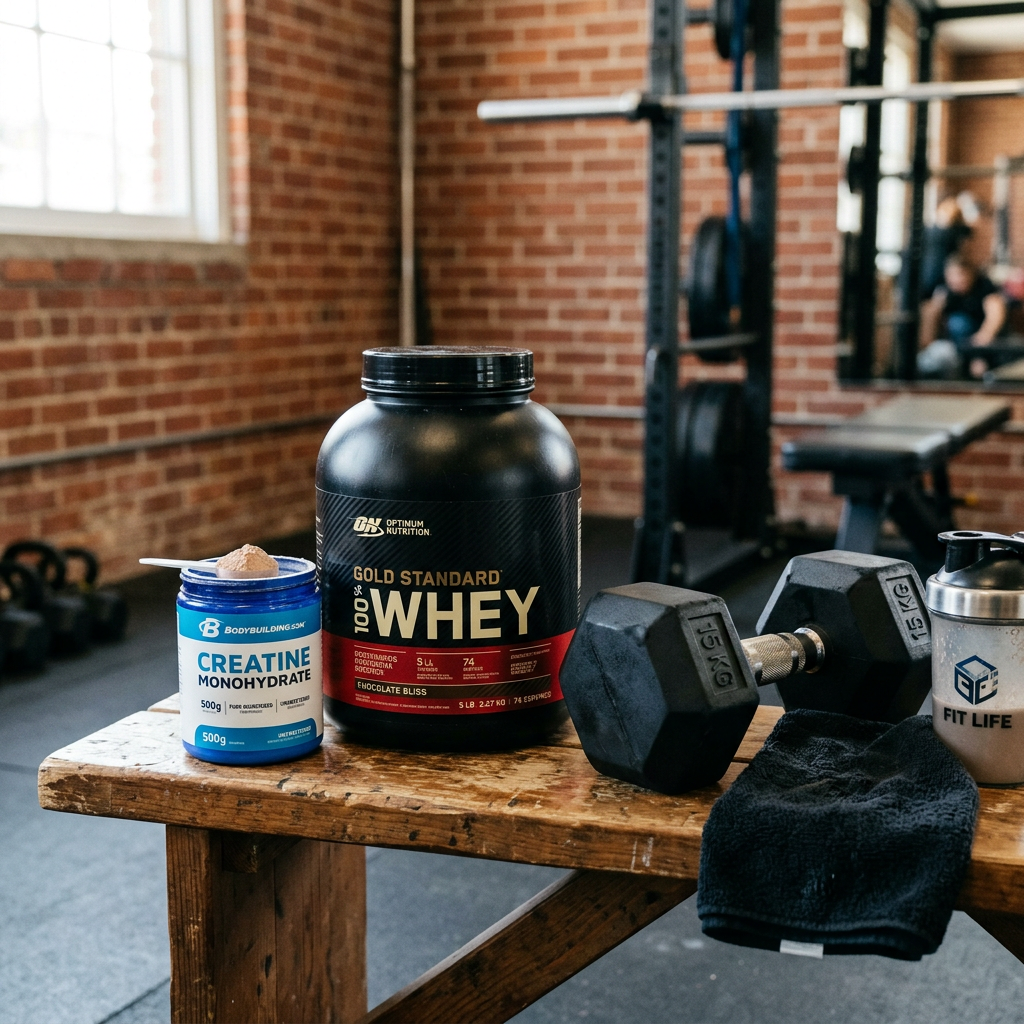
Protein is an essential nutrient for muscle growth, repair, and recovery.
When you perform strength-training exercises such as squats, bench presses, dumbbell curls, or deadlifts, your muscles experience stress that stimulates adaptation.
Consuming enough protein throughout the day helps support this process.
Why Protein Matters
Protein helps your body:
- Build and maintain muscle tissue.
- Recover from resistance training.
- Support muscle strength and development.
- Maintain lean muscle while managing body weight.
Do Beginners Need Protein Powder?
Not necessarily.
Whole foods such as chicken, fish, eggs, Greek yogurt, beans, and tofu can provide the protein your body needs.
However, protein powder can be convenient when you have a busy schedule or struggle to meet your daily protein goals through food alone.
For many healthy adults participating in resistance training, approximately 1.4–2.0 grams of protein per kilogram of body weight per day is a useful general range, although individual needs vary.
Prime Fitness Guide Tip: Focus on meeting your daily protein needs rather than assuming you need a shake immediately after every workout.
2. Creatine: Supporting Strength and Exercise Performance
Creatine monohydrate is one of the most extensively researched sports supplements.
Your body naturally produces creatine, and small amounts are also found in foods such as meat and fish.
Creatine helps replenish energy used during short bursts of intense physical activity.
Potential Benefits of Creatine
When combined with resistance training, creatine may help:
- Improve strength and power performance.
- Support repeated high-intensity exercise.
- Increase training capacity.
- Support gains in lean body mass over time.
How Much Creatine Do You Need?
A commonly recommended maintenance dose of creatine monohydrate is 3–5 grams daily for healthy adults.
Creatine does not replace exercise, protein, or proper recovery. It is an optional addition to a consistent training routine.
People with kidney disease or other relevant medical conditions should speak with a healthcare professional before using it.
Prime Fitness Guide Tip: Beginners should learn proper exercise technique and establish consistent workouts before worrying about supplements.
3. Pre-Workout: Energy and Focus Before Training
Pre-workout supplements are designed to support exercise performance, energy, and alertness.
Many formulas contain caffeine alongside ingredients such as citrulline or beta-alanine.
Some ingredients have evidence supporting specific performance benefits, but results depend on the formula, dosage, and individual response.
What Can Pre-Workout Help With?
Depending on its ingredients, a pre-workout may help:
- Increase alertness and concentration.
- Reduce perceived effort during exercise.
- Improve performance in certain workouts.
- Support endurance or repeated high-intensity efforts.
Is Pre-Workout Necessary?
No.
Beginners can have effective workouts without taking a pre-workout supplement.
Eating balanced meals, staying hydrated, and getting adequate sleep should come first.
Caffeine-containing products can also cause side effects, including nervousness, a racing heartbeat, and sleep disruption. Combining pre-workout with coffee or energy drinks may increase total caffeine intake beyond what you intended.
Prime Fitness Guide Tip: Start with good nutrition and a proper warm-up. If you choose to use a pre-workout, review its ingredients and caffeine content carefully.
4. BCAAs and Muscle Recovery Supplements: Are They Worth It?
Branched-chain amino acids, commonly called BCAAs, include leucine, isoleucine, and valine.
These amino acids participate in muscle protein metabolism.
BCAA supplements are often marketed to reduce soreness, improve recovery, and preserve muscle during exercise.
However, research suggests that people who consume adequate amounts of complete protein may receive little additional benefit from BCAA supplements.
What Actually Helps Muscle Recovery?
The most important recovery habits include:
- Eating enough protein and total calories.
- Getting sufficient sleep.
- Staying properly hydrated.
- Allowing appropriate recovery between challenging workouts.
- Gradually increasing training intensity.
Some people may find recovery supplements convenient, but they are not a substitute for these fundamentals.
Prime Fitness Guide Tip: Before purchasing recovery supplements, evaluate your nutrition, sleep, and workout schedule.
5. Joint Health and Mobility: Train for Long-Term Fitness
As we become more experienced with exercise and grow older, maintaining comfortable movement and healthy joints becomes increasingly important.
Strength training, mobility exercises, and appropriate recovery can help support long-term physical function.
Ways to Support Healthy Joints
- Practice proper exercise technique.
- Increase weights gradually.
- Include mobility exercises in your routine.
- Strengthen muscles surrounding major joints.
- Avoid repeatedly training through significant pain.
- Schedule appropriate recovery days.
Some joint-support supplements are marketed for mobility and comfort, but evidence varies by ingredient and product. No supplement can replace proper training, medical care, or rehabilitation when needed.
Prime Fitness Guide Tip: Improving movement quality and developing strength are valuable long-term investments in your fitness.
6. What Should Beginners Prioritize First?
Before spending money on supplements, focus on the habits that produce sustainable fitness progress.
Step 1 — Follow a Structured Workout Program
Start with exercises appropriate for your experience level. Learn basic movements and gradually build strength.
Step 2 — Build Balanced Nutrition Habits
Eat a variety of protein sources, carbohydrates, healthy fats, fruits, and vegetables.
Step 3 — Stay Hydrated
Drink fluids regularly and replace additional fluid lost during exercise.
Step 4 — Prioritize Sleep and Recovery
Give your body sufficient time to recover and adapt to training.
Step 5 — Consider Supplements Only When Needed
Protein powder may help meet protein goals. Creatine can support certain strength-training goals. Pre-workout and other supplements are optional rather than essential.
7. Choosing Supplements Safely
Not every supplement is suitable for every individual.
Before purchasing a product:
- Read the complete ingredient label.
- Check serving sizes and stimulant content.
- Look for reputable independent testing, such as NSF Certified for Sport or Informed Sport.
- Avoid products promising unrealistic muscle growth or rapid transformations.
- Consult a qualified healthcare professional when taking medications or managing medical conditions.
Supplements are not reviewed for effectiveness by the FDA before being marketed, and product quality can vary.
Final Thoughts: Consistency Comes Before Supplements
When I began my fitness journey, I learned that meaningful progress comes from understanding the fundamentals and applying them consistently.
Supplements can have a place in a fitness routine, but they should never become the foundation of your progress.
Strength training, balanced nutrition, proper technique, recovery, and patience matter far more than purchasing the latest supplement.
Whether you’re beginning your first workout program, returning to the gym, or trying to build strength as you get older, focus on learning and improving one step at a time.
At Prime Fitness Guide, fitness is about building knowledge, confidence, and sustainable habits—not chasing perfection.
Your fitness journey starts with consistency, not supplements.
Ready to Start Your Fitness Journey?
Explore the Prime Fitness Guide 7-Day Beginner Fitness Series, designed to introduce fundamental exercises, movement techniques, cardio, and recovery in a beginner-friendly format.
You can also explore our beginner nutrition and meal-planning resources to help build a balanced approach to fitness.
Explore more at http://www.primefitnessguide.org
References
- Jäger R, et al. International Society of Sports Nutrition Position Stand: Protein and Exercise. Journal of the International Society of Sports Nutrition. 2017.
- Kreider RB, et al. International Society of Sports Nutrition Position Stand: Safety and Efficacy of Creatine Supplementation in Exercise, Sport, and Medicine. Journal of the International Society of Sports Nutrition. 2017.
- Guest NS, et al. International Society of Sports Nutrition Position Stand: Caffeine and Exercise Performance. Journal of the International Society of Sports Nutrition. 2021.
- Morton RW, et al. A Systematic Review, Meta-analysis and Meta-regression of Protein Supplementation on Resistance Training-Induced Gains in Muscle Mass and Strength. British Journal of Sports Medicine. 2018.
- National Institutes of Health, Office of Dietary Supplements. Dietary Supplements for Exercise and Athletic Performance.
Educational Disclaimer
This article is provided for general fitness and nutrition education only and does not constitute medical advice. Supplements may not be appropriate for everyone. Consult a qualified healthcare professional before starting new supplements, particularly if you have a medical condition or take medication. Individual results vary.
Leave a Reply